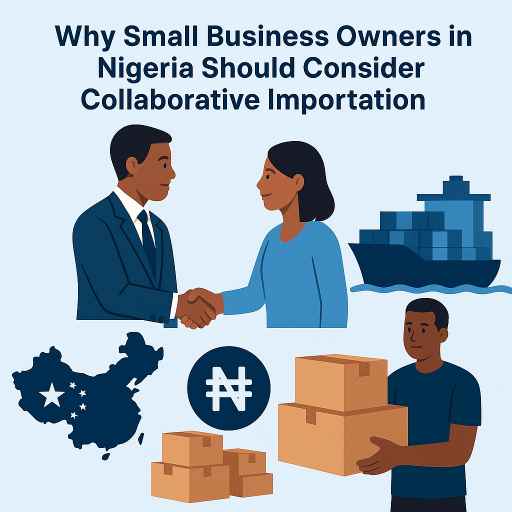
Importation for small business in Nigeria remains a difficult task for most small businesses in Nigeria starting small, yet mportation remains one of the most profitable business strategies in Nigeria today. Many products sold locally for high prices are often sourced from international markets — especially China — at extremely low costs. For instance, a phone accessory that retails for ₦10,000 in Nigeria may have originally cost only ₦1,500 when imported in bulk directly from manufacturers in China.
This massive profit margin is what gives established businesses a competitive advantage, allowing them to dominate markets and undercut smaller competitors. Yet, despite the obvious advantages of importing, many small business owners shy away from it, and why? This is because importation for small business in Nigeria is not a very easy task, reasons are tied to limited capital, lack of knowledge, or the misconception that importation is reserved for big players alone. In truth, while importing individually can be difficult for someone with limited resources, there is a powerful solution: collaborative importation.
The Profit Problem with Local Retail Sourcing
New business owners often begin by purchasing products locally at retail or semi-wholesale prices, then attempting to resell at a markup. However, the profit margins in this model are extremely thin. When other operational costs like transportation, marketing, packaging, and delivery are factored in, many small traders end up running at break-even or even at a loss.
Worse still, they’re unable to compete with more established sellers who are sourcing directly from manufacturers or importers. These big players can afford to offer discounts and price incentives that the smaller businesses cannot match. This makes market penetration, customer acquisition, and growth extremely difficult for startups.
Why Collaboration is the Game-Changer
A key challenge in importing is the Minimum Order Quantity (MOQ) requirement. Most Chinese suppliers, especially on platforms like Alibaba or 1688, only accept bulk orders. This means that someone with a very small budget — say ₦100,000 or less — may not be able to meet the required quantity or qualify for affordable shipping rates.
However, if a group of small business owners comes together and contributes collectively — for example, each contributing ₦200,000 to raise a total of ₦1 million or more — they can meet MOQs, qualify for bulk discounts, and significantly reduce their cost per unit. Once the goods are delivered, the products can be fairly shared based on each person’s contribution. Each trader now has a competitive edge: access to goods at near-import prices, and the ability to offer customers better pricing while still maintaining a healthy profit margin. Importation for small business in Nigeria is one smart stradedy to win price war with big players
Benefits of Collaborative Importation
- 1. Lower Unit Costs. Bulk orders attract significantly cheaper unit prices compared to retail or small-scale wholesale purchases in Nigeria.
- 2. Stronger Market Position. With reduced costs, sellers can price their products competitively, undercut market leaders, and attract more customers.
- 3. Shared Risk. Importation involves certain risks — logistics delays, customs duties, or product inconsistencies. In a group, these risks are shared and managed collectively.
- 4. Access to High-Demand Products. Many trending and in-demand products never reach the local wholesale market early. Importers have access to these items first, giving them a head start.
- 5. Scalability. Over time, successful group importers can transition into individual importers as capital grows and knowledge increases.
How to Get Started
Form a Trustworthy importation for small business in Nigeria Group.Only collaborate with individuals who are serious about business and have a shared vision. Create clear agreements on contributions, product selection, and profit sharing.
Research Reliable Suppliers. Platforms like Alibaba, 1688, and Made-in-China.com offer countless suppliers. Take time to research reviews, negotiate MOQs, and verify shipping options.
Use Safe Payment and Tracking Methods
Always use secure payment platforms and track shipments diligently to avoid fraud or loss.
Conclusion/Summary
Importation is no longer a strategy exclusive to large companies. Through collaboration, small businesses in Nigeria can tap into global markets, reduce product costs, and increase profit margins. It’s a smart way to scale faster, compete effectively, and build long-term sustainability in a challenging economy.Instead of struggling alone, small business owners can achieve more by working together. Collaboration is not just a survival strategy — it’s a pathway to transformation.
🚀 Ready to Start Importing Like the Big Players?
Join our Import Support Program today! We help small business owners like you:
- ✅ Collaborate with others to meet China’s minimum order quantities
- ✅ Import quality products at high profit margins
- ✅ Get coached on every step of the importation process
- Gain competitive advantage with better pricing
👉 Let’s help you grow!📩 Contact us now to join our collaborative import groups and start making smart profits.
Learn more about regulatory guides on importation in Nigeria 👉 Nigeria Ports Authority
Great