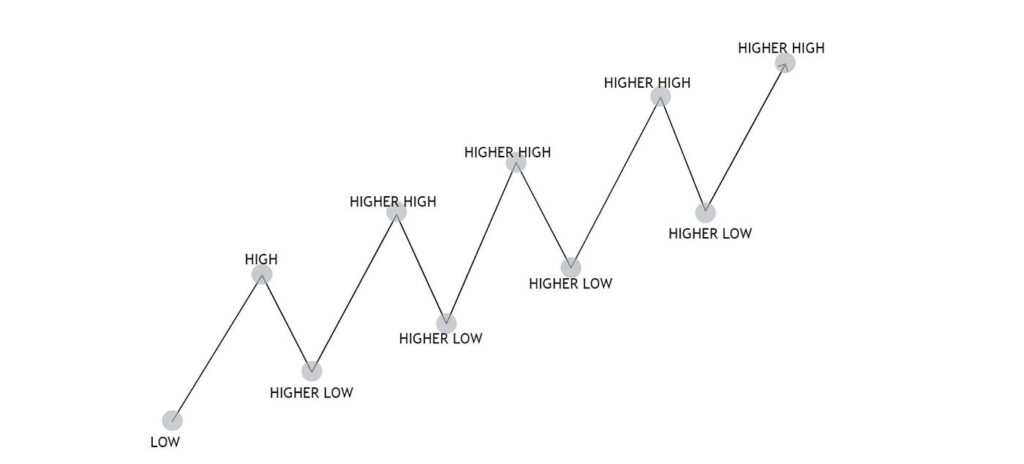
Market structure trading is one of the most effective ways to understand why markets move the way they do. While many traders focus on news releases or economic calendars, market structure trading shows that most explosive movements come from reactions within the higher timeframe zones.
These zones, once weakened or broken, tend to trigger significant price shifts that are often mistaken for fundamental reactions. Understanding market structure trading helps explain why price behaves as it does, regardless of headlines or scheduled news events.
What Market Structure Trading Really Means
Market structure trading focuses on how price behaves around key levels such as support, resistance, and supply or demand zones.
It analyzes the natural rhythm of the market rather than external factors. The approach is built on the idea that price moves in cycles, and each stage leaves behind identifiable footprints that can be studied and used for decision-making.
In market structure trading, traders pay close attention to:
Higher timeframe zones such as daily or weekly support and resistance
Liquidity pools where stop-loss orders accumulate
Structural breaks and retests that often precede major moves
This method assumes that news or economic data simply accelerates price movement that was already developing from a technical standpoint.
Why Calendar News Isn’t the True Market Driver
In financial markets, not all fundamentals are visible on an economic calendar. Many forces that move markets are unscheduled or occur quietly behind the scenes.
Examples include institutional repositioning, liquidity injections, or long-term shifts in central bank expectations. Market structure trading highlights that these invisible forces are often reflected in the chart before any news is published.
Calendar events like interest rate announcements or trade talks may only contribute a small portion to overall market momentum.
Studies and chart observations show that these events might amplify an existing move by around 20%, while the underlying market structure trading principles account for the majority of the shift.
In other words, fundamentals often act as triggers — not the true cause.
Heavy Explosions and Higher Timeframe Zone Reactions
Sharp market explosions are almost always linked to reactions around higher timeframe zones. These zones represent areas where large volumes of orders accumulate.
When price revisits or breaks these levels, strong moves occur as institutional orders enter or exit positions.
Market structure trading identifies these moments as key opportunities.A weakened support or resistance zone becomes vulnerable after multiple retests. When price finally breaks through, it releases a surge of orders waiting above or below the level.
This often appears on the chart as a sudden burst or “explosion,” confirming what market structure trading anticipates in advance.
Structure Over Headlines: The 80/20 Principle
Price action tends to reflect structural intentions long before any news confirms it. Around 80% of major movements stem from market structure trading dynamics such as liquidity shifts, support or resistance reactions, and order flow imbalances.
The remaining 20% may come from unplanned fundamentals or geopolitical factors.When major news coincides with an existing structural setup, the reaction becomes amplified — leading to the massive moves often seen on charts.
However, if the news contradicts the structure, the effect usually fades quickly. This proves that market structure trading forms the backbone of most market behavior, while headlines simply provide short-term volatility.
The Core Lesson by Upwardhabbits
In the end, charts reveal that the majority of heavy moves originate from reactions to zones on higher timeframes, not from breaking news or calendar events.
Market structure trading emphasizes that institutions respond to price levels, liquidity, and order flow, while retail traders often chase the narrative. Recognizing these structural footprints helps explain why markets move with such precision — even when the news seems random.
Also check out 👉upwardhabbits introduction to forex trading if you’re new in the game
For 👉 best Recommended broker